InfoGaia
For knee pain, consistency matters more than time
Many women believe relief requires long workouts, strict schedules, or dramatic effort. But what if knees respond better to short, steady rituals than to intense routines that are hard to maintain?
The hidden cost of “doing more”
After 40, time becomes precious — and energy selective. Long exercise sessions often collide with real life, leading to missed days and guilt. The body interprets this stop-start pattern as uncertainty, not progress.
What knees seem to crave instead is predictability.
Why the body responds to repetition
Joints don’t adapt through heroic effort. They adapt through signals sent over time.
When movements are repeated consistently:
-
Muscles learn to engage in the right order
-
Connective tissue regains elasticity
-
The nervous system stops sounding alarms
Even five minutes a day can reshape how the knee experiences load and motion.
Short routines lower resistance — mentally and physically
A routine that feels manageable is one you actually do.
Short sessions:
-
Reduce fear of overdoing it
-
Invite calm attention instead of rushing
-
Fit naturally into daily life
This lowers internal resistance — and the body notices.
How different would your relationship with movement feel if it didn’t require “preparation”?
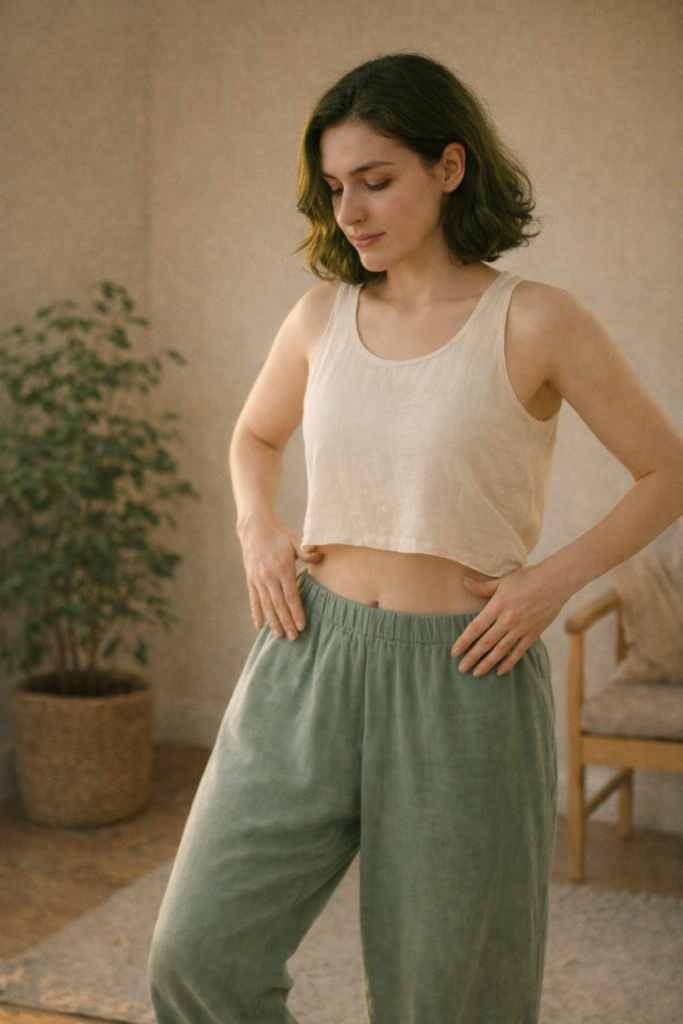
A 5-minute daily ritual for knee comfort
This routine is designed to be repeated — not perfected.
Every day
-
Seated knee extensions (slow): 6–8 reps each side
-
Standing weight shifts: 60 seconds
-
Gentle calf raises holding support: 8–10 reps
Optional (2–3 times per week)
-
Shallow step-backs: 4–6 reps
-
Slow chair squats: 5 reps
Done calmly, this sends a consistent message of safety and support to the knees.
What if five minutes became your most reliable habit?
Why intensity often backfires
Pushing harder doesn’t always accelerate healing — especially when joints are sensitive.
High intensity can:
-
Trigger protective muscle guarding
-
Increase swelling or soreness
-
Reinforce fear of movement
Consistency, on the other hand, builds trust. And trust allows adaptation.
Time compounds quietly
The effects of short routines don’t announce themselves immediately. They accumulate.
Week by week, people often notice:
-
Less stiffness in the morning
-
More ease on stairs
-
Greater confidence in daily movement
These changes are subtle — but meaningful.
What kind of progress would feel most valuable to you right now?
Cross-reading
If time feels limited, our article Hyperbolic Stretching — Angle 1 explores how very brief, low-effort movements can influence flexibility and joint comfort without demanding long sessions or high intensity.
A brave next step
For those who prefer guided routines that emphasize consistency over intensity, structured programs built around short daily practices can offer clarity and reassurance.
This post contains affiliate links; InfoGaia may earn a commission if you purchase through these links.
Final thoughts
Knees don’t ask for more time — they ask for more continuity. When movement becomes a small, reliable ritual, the body responds with quiet confidence and gradual ease. Consistency, practiced gently, often outlasts effort.
— Gaia Oliveira, Wellness Editor
Ethical note & disclosure
This article is for educational purposes only and does not replace medical advice. Individual responses vary, especially with existing conditions. Consult a qualified professional if pain persists or worsens. This post contains affiliate links; InfoGaia may earn a commission if you purchase through these links.
Continue reading in Body Renewal:
Knee pain is not about the knee → https://infogaia.online/body-renewal/knee-pain-not-about-the-knee/